
Sweet, Salty, Perfect: Why Thai Desserts Aren’t Sugar Bombs
“Wait, Is the Sauce Supposed to Be Salty?”
We’ve heard it more than once. A guest digs into our Mango Sticky Rice, pauses, and tells us the coconut sauce is salty. Not super sweet. Salty.
Our answer every time: Yep! That’s the point. That’s how it’s made in Thailand. Not everything needs to be ultra sweet.
Let’s be honest about dessert in Utah. Giant frosted cookies, soda loaded with syrup and cream, cakes stacked with frosting. Here, sweet usually means as sweet as humanly possible. Thai desserts play a different game. They’re sweet, sure. But they’re also salty, rich, fragrant and balanced. They’re not supposed to be sugar bombs, and they’re built to leave you wanting one more bite instead of a glass of water and a nap.
If you’ve been hunting for real Mango Sticky Rice in Salt Lake City, here’s what makes a true Thai dessert, and why the coconut sauce on ours tastes exactly the way it should.
Balance Doesn’t Clock Out at Dessert
Every great Thai dish is a balancing act. Sweet, sour, salty, spicy and rich, all pulling against each other until nothing takes over. That’s why Pad Thai has tamarind and fish sauce next to palm sugar, and why Tom Yum hits sour, spicy and salty all at once.
Thai cooks don’t drop those rules when it’s time for dessert. Instead of piling on refined sugar, Thai sweets lean on:
- Coconut: Rich, creamy and naturally a little sweet.
- Ripe fruit: Mango, banana, jackfruit. Let the fruit do the heavy lifting.
- Palm sugar: A deeper, caramel-like sweetness instead of a sharp sugar rush.
- Pandan: The grassy, vanilla-like leaf behind countless Bangkok sweets.
- A pinch of salt: The secret weapon that makes everything else taste more like itself.
Thailand has its share of seriously sweet treats, too. But even those are built around contrast and texture, not sugar for sugar’s sake. Want to know how seriously we take ingredients? Read No Shortcuts, No Substitutes.
Why Salt Makes Sweet Taste Better
You already know this trick. You just might not know you know it.
Salted caramel. Chocolate-covered pretzels. Sea salt on a brownie. A little salt tames bitterness, sharpens sweetness and makes rich flavors taste richer. Your tongue stops getting hit with one flat note and starts tasting the whole thing.
Thai cooks figured this out a long time ago. In Thai desserts, salt isn’t a garnish. It’s structural. Pull it out and the dessert falls flat.
Anatomy of a Real Mango Sticky Rice
Mango Sticky Rice (Khao Niao Mamuang) is Thailand’s most iconic dessert, and it’s the perfect lesson in balance. Every part of the plate has a job.
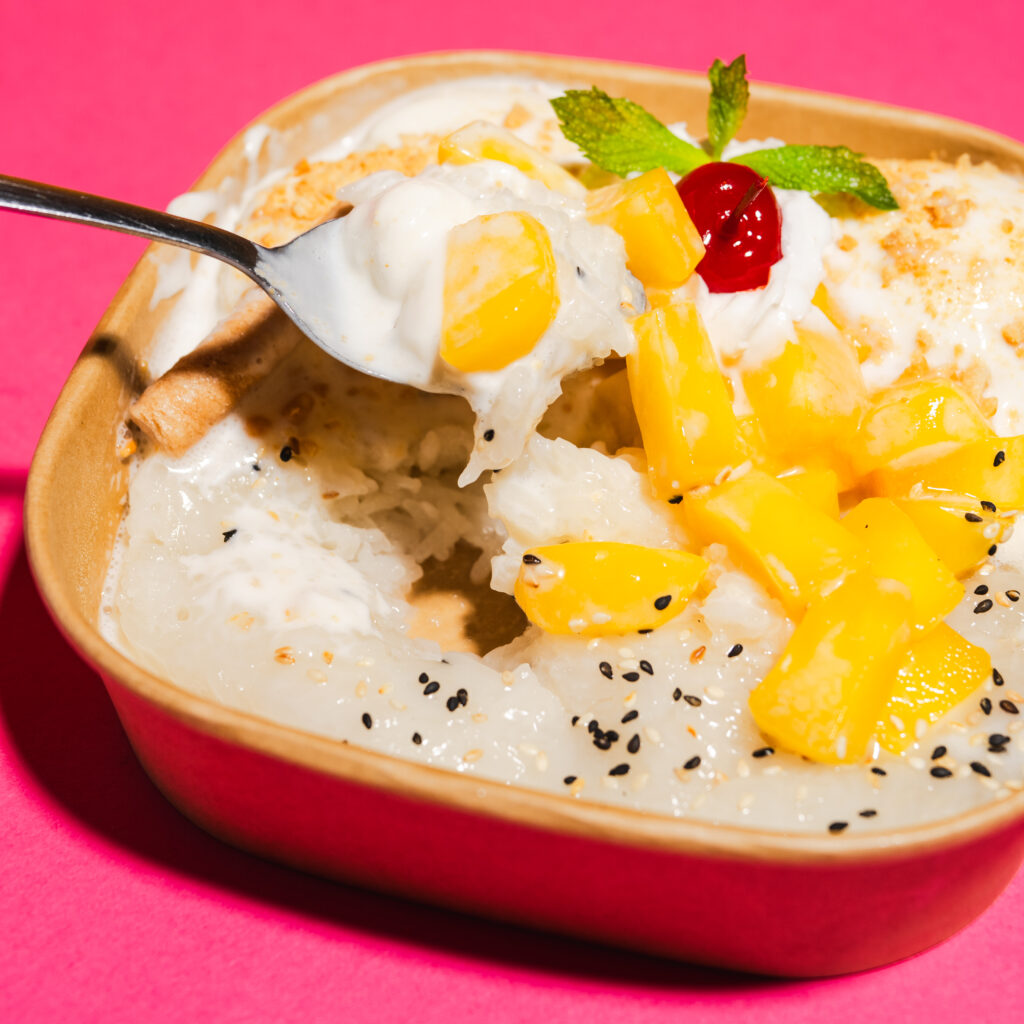
The rice: Glutinous sticky rice, steamed until chewy, then soaked in warm coconut milk with sugar and a pinch of salt. We make ours in-house, fresh every day. It’s sweet, but it stays in the background. Think of it as the stage, not the show.
The mango: Ripe, juicy and honey-sweet. The mango is the sweetest thing on the plate, and it’s the star. Everything else exists to make it shine.
The coconut sauce: This is where people get surprised. Thick, warm coconut cream, deliberately seasoned with salt. Not a little salt by accident. Salty on purpose. It cuts through the sweetness of the mango and the rice and ties the whole dish together. Ours is made from scratch daily and balanced by hand. Without it, Mango Sticky Rice is just fruit and rice. With it, it’s one of the best desserts on the planet.
The crunch: Crispy mung beans scattered on top, the traditional finish you’ll find on Mango Sticky Rice all over Bangkok. They add a toasty, nutty crunch against all that soft, creamy texture.
How to eat it: Get all three in every bite. Rice, mango, sauce, plus a little crunch. Sweet, salty, creamy, chewy, crispy. That’s the magic.
If It Tastes Like Candy, Something’s Off
Plenty of Mango Sticky Rice in the U.S. gets the American treatment. More sugar in the rice. Sweet sauce instead of salty. Sometimes no sauce at all. Basically, it gets turned into another Utah sugar bomb. The result is heavy, one-note and you’re done after two bites.
We don’t do that. Our Mango Sticky Rice is made the way Nina grew up eating it in Bangkok: sweet mango, gently sweet rice and a coconut sauce with real salt in it. If you taste salt, that’s not a mistake. That’s Bangkok.
Nina’s Thai Coconut Cake
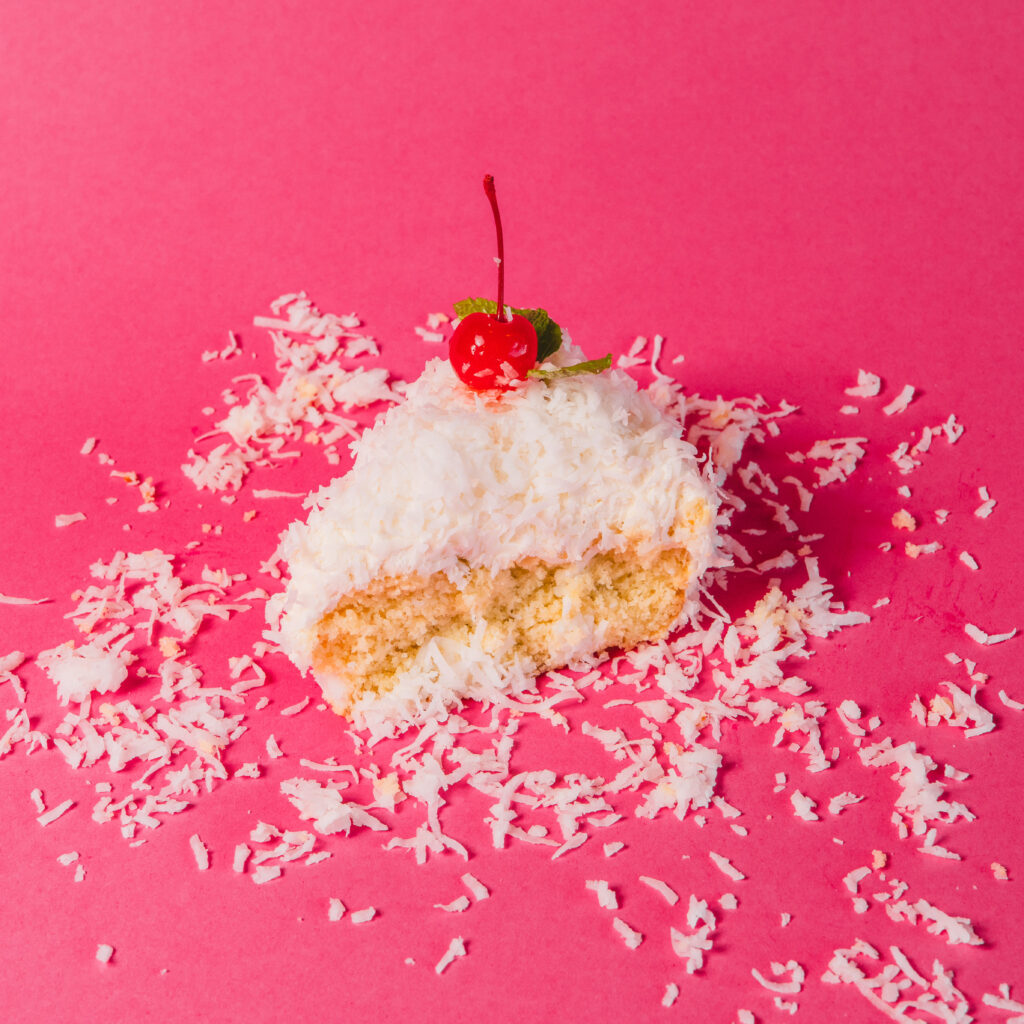
If there’s one dessert on our menu with Nina’s fingerprints all over it, this is it. Our Thai Coconut Cake is made entirely from scratch by Nina, start to finish.
It’s soft, moist and coconut-forward, with a light crumb and a snowfall of coconut on top. What it isn’t is cloyingly sweet. No sugar-bomb frosting, no candy-store aftertaste. Just a perfectly balanced coconut flavor that lets the coconut taste like coconut.
It’s the Thai dessert philosophy in cake form: balance over overload. One slice and you’ll get it.
The Rest of Our Sweet Lineup
Our dessert menu is short on purpose. Every item on it follows the same rule: balanced, not overloaded.
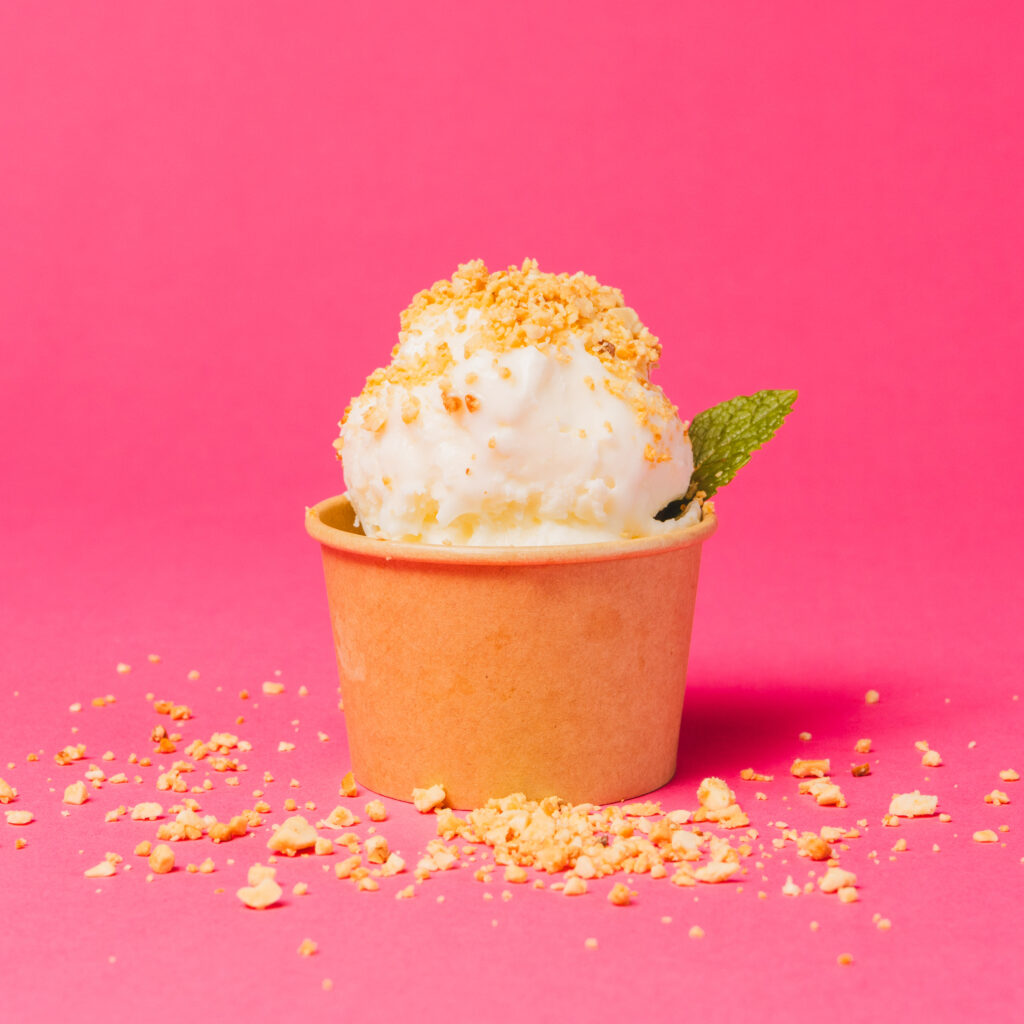
Thai Gelato: Ultra-creamy gelato in two flavors, coconut or mango. The coconut gelato gets drizzled with rich coconut cream and finished with crushed peanuts. Cool, nutty and a nod to the coconut ice cream sold from street carts all over Bangkok. The mango gelato is finished with a drizzle of mango purée.
Thai Coconut Gelato + Sweet Sticky Rice: Cold, creamy coconut gelato over warm, chewy sticky rice. Hot and cold, soft and chewy. In Bangkok, coconut ice cream over sticky rice is a classic street-cart treat, and this is our version.
Ube Cheesecake: Back by popular demand. Ube, the purple yam loved across Southeast Asia, brings a gentle, nutty, vanilla-like sweetness to a creamy cheesecake. It’s rich without being heavy, and yes, it really is that purple.
The Big Mango Sunday: Our over-the-top showstopper. Creamy coconut gelato, sweet sticky rice and fresh mango, finished with our house-made savory coconut sauce. Sweet meets salty, all in one bowl. Bring a friend. Or don’t.
Mango Sticky Rice, Thai Gelato and the Coconut Gelato + Sweet Sticky Rice are all gluten-free.
Would you rather drink your dessert? Our Sticky Situation cocktail is boozy Mango Sticky Rice in a glass. Read more about our cocktails here
Save Room for Dessert
Thai dessert isn’t an afterthought. It’s the last chapter of the meal, and it follows the same rules as everything that came before it: balance, contrast and real ingredients.
Whether you’re coming from South Jordan, Herriman, Bluffdale, Draper or Salt Lake City, the best Mango Sticky Rice in the Salt Lake City area is at The Big Mango and it’s worth the drive. Find us at 4182 W 13400 S, Suite 500 in Riverton, or order online at order.bigmangothai.com. Just save room.
Frequently Asked Questions
Is Mango Sticky Rice supposed to be salty?
Yes. Traditional Thai Mango Sticky Rice is served with a coconut cream sauce that’s intentionally seasoned with salt. The salty sauce balances the sweet mango and sticky rice, which is why the dish tastes rich without being too sweet.
Why is there salt in Thai desserts?
Thai cooking is built on balancing sweet, salty, sour, spicy and rich flavors, and desserts follow the same principle. A little salt sharpens sweetness, tames bitterness and makes coconut taste richer.
Are Thai desserts very sweet?
Most Thai desserts are less sugary than typical American desserts. They get their sweetness from coconut, ripe fruit and palm sugar, balanced with salt, so they taste sweet without being heavy.
Where can I get Mango Sticky Rice near Salt Lake City?
The Big Mango in Riverton serves traditional Bangkok-style Mango Sticky Rice with a salty coconut cream sauce. It’s gluten-free and available for dine-in and online ordering.