' d='M650 4119Q650 4201 586 4245Q522 4289 400 4289L78 4289L78 3666L382 3666Q496 3666 557 3710Q618 3753 618 3828Q618 3874 597 3909Q575 3945 536 3965Q589 3982 619 4022Q650 4061 650 4119ZM221 3775L221 3922L365 3922Q418 3922 446 3903Q473 3884 473 3848Q473 3811 446 3793Q418 3775 365 3775L221 3775ZM504 4104Q504 4027 389 4027L221 4027L221 4181L389 4181Q446 4181 475 4162Q504 4143 504 4104ZM1424 4156L1135 4156L1080 4289L932 4289L1210 3666L1352 3666L1631 4289L1480 4289L1424 4156ZM1379 4046L1280 3808L1181 4046L1379 4046ZM2522 3666L2522 4289L2404 4289L2093 3911L2093 4289L1951 4289L1951 3666L2070 3666L2380 4045L2380 3666L2522 3666ZM3346 3968L3478 3968L3478 4221Q3427 4259 3361 4280Q3294 4300 3226 4300Q3129 4300 3052 4259Q2974 4217 2930 4144Q2886 4070 2886 3978Q2886 3885 2930 3812Q2974 3738 3052 3697Q3131 3655 3229 3655Q3311 3655 3377 3683Q3444 3711 3490 3763L3397 3849Q3330 3778 3236 3778Q3176 3778 3130 3803Q3084 3828 3058 3874Q3032 3919 3032 3978Q3032 4036 3058 4081Q3084 4127 3129 4152Q3175 4177 3234 4177Q3296 4177 3346 4151L3346 3968ZM4094 4045L4010 4132L4010 4289L3866 4289L3866 3666L4010 3666L4010 3957L4286 3666L4446 3666L4188 3944L4461 4289L4293 4289L4094 4045ZM4741 3978Q4741 3886 4785 3813Q4829 3739 4907 3697Q4985 3655 5082 3655Q5179 3655 5257 3697Q5334 3739 5379 3813Q5423 3886 5423 3978Q5423 4070 5379 4143Q5334 4216 5257 4258Q5179 4300 5082 4300Q4985 4300 4907 4258Q4829 4216 4785 4143Q4741 4070 4741 3978ZM5277 3978Q5277 3920 5252 3874Q5226 3829 5182 3804Q5137 3778 5082 3778Q5027 3778 4982 3804Q4938 3829 4912 3874Q4887 3920 4887 3978Q4887 4036 4912 4081Q4938 4127 4982 4152Q5027 4177 5082 4177Q5137 4177 5182 4152Q5226 4127 5252 4081Q5277 4036 5277 3978ZM6014 4045L5930 4132L5930 4289L5787 4289L5787 3666L5930 3666L5930 3957L6206 3666L6366 3666L6108 3944L6382 4289L6213 4289L6014 4045ZM7434 4045L7351 4132L7351 4289L7207 4289L7207 3666L7351 3666L7351 3957L7627 3666L7787 3666L7529 3944L7802 4289L7634 4289L7434 4045ZM8121 3666L8265 3666L8265 4289L8121 4289L8121 3666ZM8797 3784L8597 3784L8597 3666L9141 3666L9141 3784L8941 3784L8941 4289L8797 4289L8797 3784ZM9434 3978Q9434 3885 9478 3812Q9522 3738 9599 3697Q9676 3655 9772 3655Q9853 3655 9919 3684Q9984 3712 10029 3766L9936 3851Q9873 3778 9779 3778Q9721 3778 9676 3804Q9630 3829 9605 3874Q9580 3920 9580 3978Q9580 4036 9605 4081Q9630 4127 9676 4152Q9721 4177 9779 4177Q9873 4177 9936 4103L10029 4189Q9984 4243 9918 4272Q9852 4300 9771 4300Q9676 4300 9599 4259Q9522 4217 9478 4144Q9434 4070 9434 3978ZM10952 3666L10952 4289L10808 4289L10808 4034L10525 4034L10525 4289L10380 4289L10380 3666L10525 3666L10525 3912L10808 3912L10808 3666L10952 3666ZM11837 4174L11837 4289L11355 4289L11355 3666L11826 3666L11826 3782L11498 3782L11498 3917L11788 3917L11788 4029L11498 4029L11498 4174L11837 4174ZM12779 3666L12779 4289L12660 4289L12350 3911L12350 4289L12207 4289L12207 3666L12326 3666L12636 4045L12636 3666L12779 3666ZM14167 4300L14092 4231Q14003 4300 13884 4300Q13816 4300 13762 4278Q13708 4257 13677 4217Q13646 4178 13646 4129Q13646 4071 13679 4027Q13711 3983 13783 3943Q13750 3908 13734 3877Q13719 3845 13719 3811Q13719 3766 13743 3731Q13767 3696 13811 3677Q13856 3658 13913 3658Q13995 3658 14043 3697Q14092 3736 14092 3801Q14092 3850 14064 3887Q14035 3924 13970 3959L14084 4065Q14105 4022 14116 3968L14227 4003Q14209 4086 14170 4144L14243 4212L14167 4300ZM13846 3809Q13846 3828 13856 3845Q13865 3861 13894 3889Q13939 3865 13957 3846Q13975 3826 13975 3804Q13975 3781 13959 3767Q13943 3752 13913 3752Q13882 3752 13864 3768Q13846 3784 13846 3809ZM14011 4155L13860 4014Q13818 4038 13800 4061Q13783 4085 13783 4114Q13783 4149 13813 4170Q13843 4192 13894 4192Q13959 4192 14011 4155ZM15670 4119Q15670 4201 15606 4245Q15542 4289 15420 4289L15098 4289L15098 3666L15403 3666Q15517 3666 15578 3710Q15639 3753 15639 3828Q15639 3874 15617 3909Q15595 3945 15556 3965Q15609 3982 15639 4022Q15670 4061 15670 4119ZM15241 3775L15241 3922L15385 3922Q15438 3922 15466 3903Q15493 3884 15493 3848Q15493 3811 15466 3793Q15438 3775 15385 3775L15241 3775ZM15525 4104Q15525 4027 15410 4027L15241 4027L15241 4181L15410 4181Q15467 4181 15496 4162Q15525 4143 15525 4104ZM16445 4156L16155 4156L16100 4289L15952 4289L16230 3666L16372 3666L16651 4289L16500 4289L16445 4156ZM16399 4046L16300 3808L16201 4046L16399 4046ZM17368 4289L17248 4116L17241 4116L17115 4116L17115 4289L16971 4289L16971 3666L17241 3666Q17324 3666 17385 3694Q17446 3721 17479 3772Q17512 3823 17512 3892Q17512 3962 17478 4012Q17445 4062 17383 4089L17523 4289L17368 4289ZM17233 3784L17115 3784L17115 4001L17233 4001Q17298 4001 17332 3972Q17365 3944 17365 3892Q17365 3840 17332 3812Q17298 3784 17233 3784Z'/%3E%3C/svg%3E)
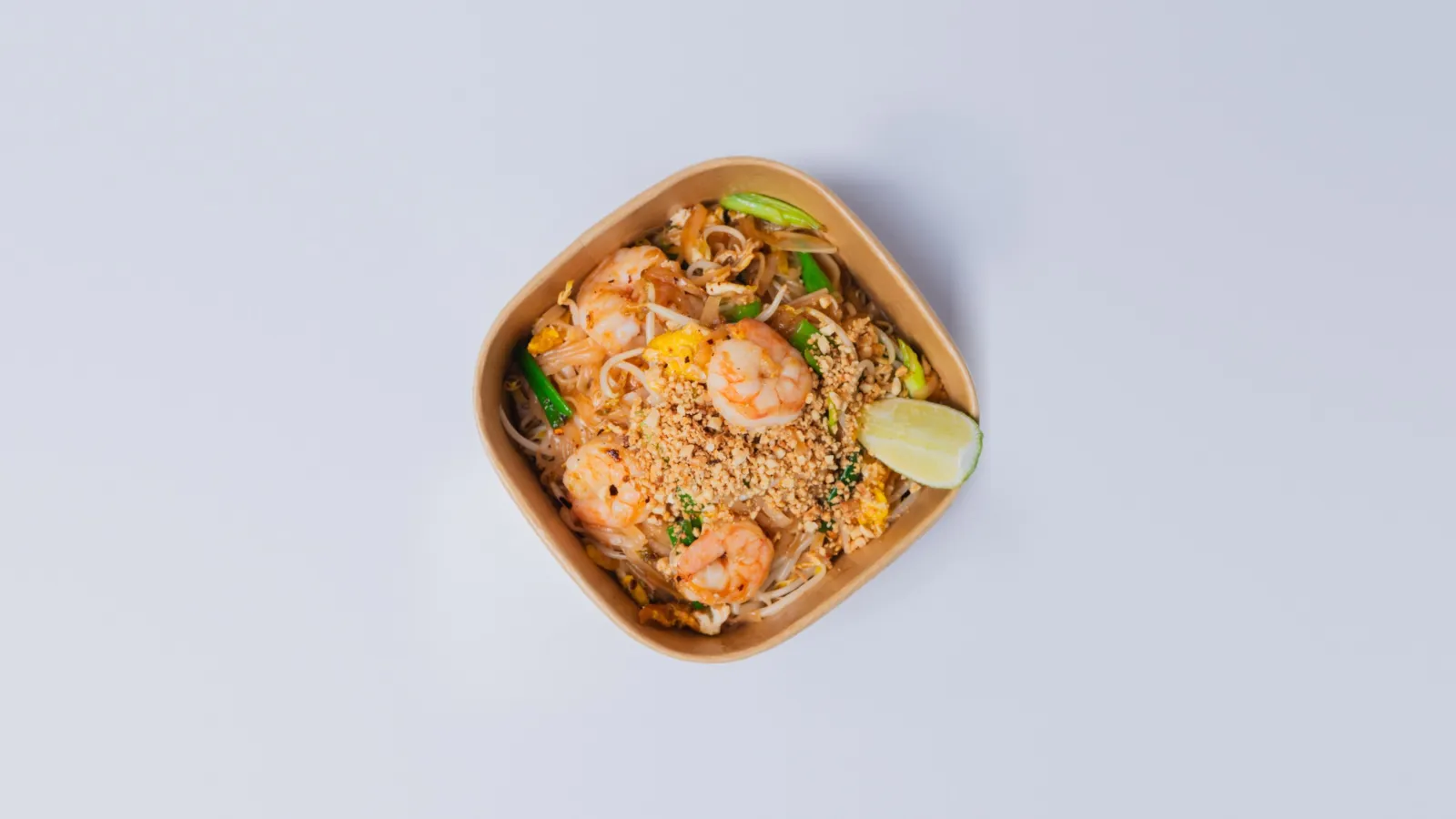
Everybody has a Pad Thai test. New Thai restaurant opens, you order the Pad Thai, and that one plate decides whether you ever come back.
Here’s the problem, though. A lot of Pad Thai in Utah fails the test before it even hits the table. It’s too sweet, too saucy and ketchup-red, and it’s often piled high with vegetables that never belonged there. In other words, if that’s the only Pad Thai you’ve had, you haven’t really had Pad Thai.
So let’s talk about what the real thing should taste like, where it came from, and where to find it in Salt Lake.
What Pad Thai Actually Is
At its heart, Pad Thai is simple. First, thin rice noodles hit a screaming-hot wok with egg, protein and a sauce built on three things: tamarind for sour, fish sauce for salt and palm sugar for a gentle sweetness. Then bean sprouts, crushed peanuts and a squeeze of lime finish it off.
That’s it. You won’t find ketchup, a sriracha shortcut or a mystery sweet glaze. Instead, great Pad Thai is a balancing act between sweet, sour and salty, the same balance behind every great Thai dish. (If you want the deep dive, read Thai Flavor 101.)
How to Spot the Real Thing
- Sour comes first, sweet second. Tamarind should lead. If your first thought is “sugar,” something went wrong.
- The noodles aren’t swimming in sauce. Real Pad Thai is glossy, not soupy. In fact, the sauce should coat the noodles, not drown them.
- You can taste the wok. A little smoky char from high heat, called wok hei, tells you the cook fired it fast and hot, to order.
- The color is tan, not red. Bright orange-red usually means someone used ketchup or paprika instead of tamarind.
- You finish it at the table. Lime, bean sprouts and peanuts let you dial in the last bit of sour, crunch and richness yourself.
A National Dish That’s Younger Than You Think
Pad Thai feels ancient. However, it isn’t. The dish as we know it took off in the late 1930s and early 1940s under Prime Minister Plaek Phibunsongkhram, the same leader who officially changed the country’s name from Siam to Thailand in 1939.
Phibun’s government was pushing hard to build a modern Thai national identity, and food was part of the plan. As a result, the government promoted stir-fried rice noodles, a style with Chinese roots, as a cheap, filling, distinctly Thai street food. Historians also often point out that the push helped stretch the country’s rice during tough wartime years. Fittingly, the name says it all: Pad Thai means “Thai-style stir-fry.”
Historians still argue over some details, including exactly who created the recipe and how much of it already existed in Chinese-Thai cooking. Nobody argues about the result, though. Within a generation, Pad Thai was everywhere, and today it’s Thailand’s most famous dish worldwide.
How We Make Pad Thai at The Big Mango
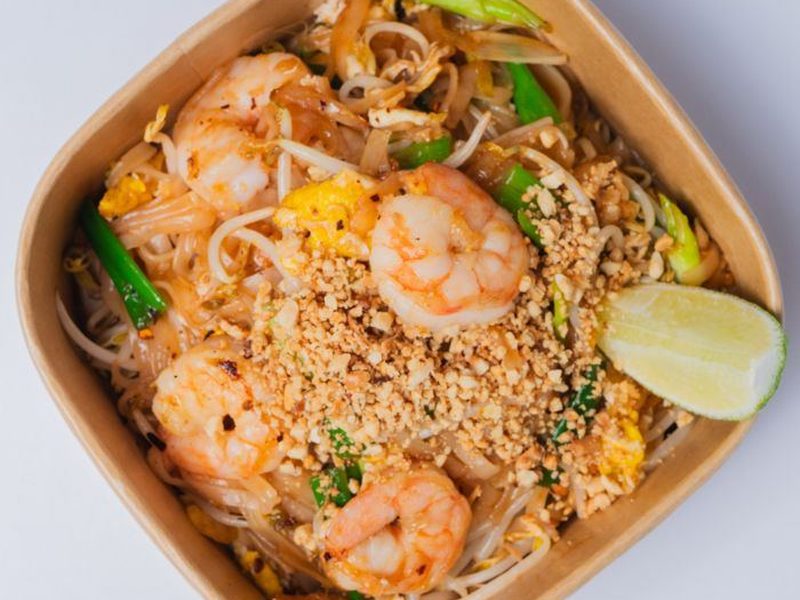
Pad Thai is our most-ordered dish, and that’s exactly why we don’t take it lightly. We make it the way cooks make it in Bangkok, a city we’d put up there as one of the best food cities on earth.
- House-made tamarind sauce. We make our sauce in-house from scratch and balance it to taste sour, salty and gently sweet, never sugary.
- Sweet preserved radish. Most Pad Thai in Utah skips this traditional Bangkok ingredient. However, it adds little pops of savory-sweet crunch that make the dish taste right.
- Cooked to order in the wok. We fire every plate fresh, so you get that smoky edge.
- Finished the classic way. Lime, bean sprouts and crushed peanuts. Order it spicy and we add chili flakes.
- Zero filler. You won’t find bell peppers, baby corn or zucchini, just what belongs in Pad Thai.
As a result, it isn’t the sweet, saucy Pad Thai you may be used to. Instead, it’s the real one. If you’ve ever eaten Pad Thai on a Bangkok street, one bite takes you right back. (More on what makes Thai food authentic.)
Build Your Plate
Pick your protein:
- Chicken
- Pork
- Shrimp
- Beef flank
- Ribeye
- Tofu
- Veggies
The owners’ order: Fair warning, Nina is an absolute Pad Thai fanatic. She grew up in Bangkok eating the real thing, and if a plate leaves our kitchen too sweet or too saucy, she’ll know. Her go-to is shrimp and beef flank, ordered Thai Spicy. In fact, she and Jeff eat it two or three times a week and still aren’t tired of it.
Our Pad Thai is gluten-free as prepared. However, our kitchen also cooks with wheat, so if you have celiac disease or a serious allergy, let us know when you order.
Feeding a crowd? Then Pad Thai is the safest bet on any party spread. See our holiday party catering guide.
Find the Real Pad Thai in Salt Lake
We’re at 4182 W 13400 S, Suite 500 in Riverton, an easy drive from Salt Lake City, South Jordan, Herriman, Draper and Bluffdale. Come in and take the Pad Thai test, or order online for pickup or delivery.
Fair warning, though: after one plate, you might not go back to the other stuff.
Frequently Asked Questions
Traditional Pad Thai isn’t spicy. It’s sour, salty and gently sweet. At The Big Mango, you can order it spicy and we’ll add chili flakes.
Traditional Pad Thai uses rice noodles, tamarind and fish sauce, which are typically gluten-free, but some restaurants add soy or oyster sauce. The Big Mango’s Pad Thai is gluten-free as prepared. Tell your server if you have celiac disease, since the kitchen also uses wheat.
Pad Thai uses thin rice noodles with a tamarind-based sauce that’s sour, salty and lightly sweet, finished with peanuts and lime. Pad See Ew uses wide rice noodles stir-fried with dark soy sauce for a smoky, savory-sweet flavor.
Real Pad Thai is built on tamarind, so it should taste sour first, with palm sugar only balancing the edges. Very sweet, red Pad Thai usually relies on sugar or ketchup instead of tamarind.
The Big Mango in Riverton serves Bangkok-style Pad Thai with a house-made tamarind sauce and sweet preserved radish, cooked to order, about 25 minutes south of downtown Salt Lake City.